A Guide to Choosing LED’s
What is an LED?
The word LED means ‘light-emitting diode’ and refers to a special type of diode that glows when electricity is passed through it. LED’s can be made from a range of materials – a common semi-conducting material used is called gallium arsenide phosphide. We hope you find our A Guide to Choosing LED’s helpful.
How do LED’s work?
As with all diodes, LED’s only allow current to pass in one direction. The cathode is normally indicated by a flat side on the casing and the anode is normally indicated by a slightly longer leg (see image below).
LED Light-Output Range & Power Requirements:
LED’s can be supplied in a range of light outputs and individual colours including white, red, green and blue. They can also be supplied in formats that switch between two or more colours known as bi-colour and tri-colour LEDS.
The light output of an LED is measured in nanometer’s (nm*) and they can be manufactured to emit light output as follows (see chart below**):
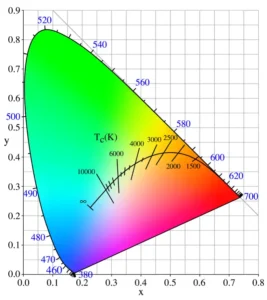
- UV light (350-420nm),
- Visible spectrum light (420-660nm) &:
- Infra-Red light (660-1080nm).